Replacing old electrical wiring becomes an urgent necessity under several specific conditions. You must replace your electrical wiring if your house is over 40 years old, your circuit breakers trip frequently, your lights flicker continuously, your wall receptacles feel warm to the touch, or you detect a faint burning plastic odor near your walls. Updating these systems through professional wiring and outlet installation prevents severe fire hazards, protects sensitive electronics from power surges, and brings your property up to current local safety codes.
Living in Fort Mill, SC means experiencing a climate that puts continuous, heavy demands on residential electrical systems. The intensely hot and humid Carolina summers require central air conditioning units to run continuously for months. In the winter, many homeowners rely on electric heat pumps or supplemental space heaters. This constant, heavy electrical draw requires a highly reliable, modern power infrastructure. Many homes situated in the historic downtown area of Fort Mill, or older neighborhoods scattered throughout York County, still contain their original electrical layouts. These older layouts were designed during an era when a home only needed to power a few incandescent lamps, a refrigerator, and a radio.
Today, a standard kitchen alone contains a microwave, a dishwasher, a high-capacity refrigerator, an air fryer, a coffee maker, and smart home devices. Plugging all these modern, high-draw appliances into a dated electrical grid forces the system to pull more current than the physical wires can safely handle. The physical wires heat up inside your walls, melting the surrounding insulation and creating a significant risk of an electrical fire.
Table of Contents
What Are The Physical Warning Signs Your Home Needs Rewiring?
Your house constantly communicates the condition of its electrical grid. Paying attention to these physical clues can save your property from catastrophic damage.
Flickering or dimming lights act as one of the most visible indicators of electrical distress. If you turn on your vacuum cleaner or your microwave and the lights in the room momentarily dim, the circuit is overloaded. The new appliance is pulling so much current that it starves the lighting fixtures of the electricity they need to operate continuously. Continuous dimming points to loose connections within the walls or a severely outdated electrical panel struggling to distribute power evenly.
Warm switch plates and hot receptacles require immediate attention. Electricity flowing through a properly sized, healthy copper wire generates very little heat. Heat builds up when the electrical current encounters resistance. This resistance usually comes from loose connections, corroded wires, or wires that are too small to carry the required load. If you place your hand on a plastic wall cover and it feels uncomfortably warm, the metal components directly behind that plastic are likely scorching hot.
Unusual sounds and smells provide another layer of warning. Electricity should operate entirely silently. Hearing a faint buzzing, crackling, or sizzling sound coming from your walls points to electrical arcing. Arcing happens when electricity jumps across a gap between two loose wires. This tiny spark generates immense heat, often reaching thousands of degrees in a fraction of a second. This heat melts the plastic casing around the wires, producing a distinct, acrid smell similar to burning plastic or ozone.
Frequent tripped circuit breakers act as a built-in safety mechanism, stopping the flow of electricity when a circuit becomes dangerously overloaded. A breaker tripping once a year might just be a random anomaly. A breaker tripping multiple times a month indicates a fundamental flaw in the electrical layout. The circuit is continuously asked to carry a heavier load than it is rated for, forcing the breaker to sever the connection to prevent a fire.
How Do Outdated Materials Compromise Your Safety?
The materials used by electricians have evolved drastically over the last century. Homes built in different decades present entirely different sets of hazards.
Knob and tube wiring, common in homes built before the 1950s, represents one of the most dangerous electrical setups still found in historic Fort Mill properties. This system runs single insulated copper wires through porcelain cylinders (tubes) drilled through wooden floor joists and supports them with porcelain knobs along the length of the wood. This system lacks a ground wire entirely. A ground wire provides a safe, alternative path for rogue electricity to follow if a fault occurs, sending the dangerous current harmlessly into the earth. Without a ground wire, any electrical fault sends the current directly into the surrounding wood framing or into the body of a person touching a plugged-in appliance. The insulation on knob and tube wiring is also made of rubber and cloth, which turns brittle and flakes away after decades of seasonal temperature changes, leaving bare, energized wire exposed directly to dry wooden studs.
Aluminum wiring became highly popular between 1965 and 1973 due to a copper shortage. Aluminum conducts electricity well, but it expands and contracts at a much higher rate than copper when it heats up and cools down. Every time electricity flows through an aluminum wire, the wire heats up slightly and expands. When the power shuts off, it cools and contracts. Years of this continuous expansion and contraction cause the wire to work itself loose from the screws holding it to the receptacle. These loose connections create the perfect environment for dangerous electrical arcing. Aluminum also oxidizes quickly. While copper oxide remains a decent conductor of electricity, aluminum oxide acts as a severe resistor, generating massive amounts of heat at the connection points.
Cloth-insulated wiring, used extensively through the mid-20th century, poses another distinct threat. The cloth wrapping deteriorates rapidly, especially in hot Southern attics. Once the cloth crumbles, the exposed metal conductors can easily touch each other or touch the metal junction boxes, causing immediate short circuits and sparking.
What Role Does Wiring and Outlet Installation Play in Modern Safety?
Upgrading your electrical infrastructure involves far more than simply replacing old wires with new ones. Professional wiring and outlet installation completely modernizes the safety mechanisms protecting your family.
Installing Ground Fault Circuit Interrupters (GFCIs) is a critical component of any modern electrical update. Building codes now mandate GFCIs in any location where water and electricity might mix. This includes kitchens, bathrooms, laundry rooms, unfinished basements, and exterior locations around your Fort Mill property. A GFCI constantly monitors the amount of current flowing into an appliance and the amount flowing back out. If it detects even a variation of four to five milliamps, an amount so small it barely registers as a shock to a human—it cuts the power to the circuit in a fraction of a second. This rapid reaction prevents severe electrocution if a hairdryer falls into a sink or if you touch a faulty exterior light fixture while standing on wet grass.
Arc Fault Circuit Interrupters (AFCIs) protect the rest of your home. While GFCIs prevent electrocution, AFCIs prevent electrical fires. These devices detect the specific electrical signature of a dangerous arc, the sparking that occurs behind walls when a wire is pierced by a nail or pinched by heavy furniture. Normal breakers only trip when the total current exceeds their rating, meaning a small, continuous arc can generate enough heat to start a fire without ever tripping a standard breaker. AFCIs recognize the erratic current of the arc and shut down the power immediately.
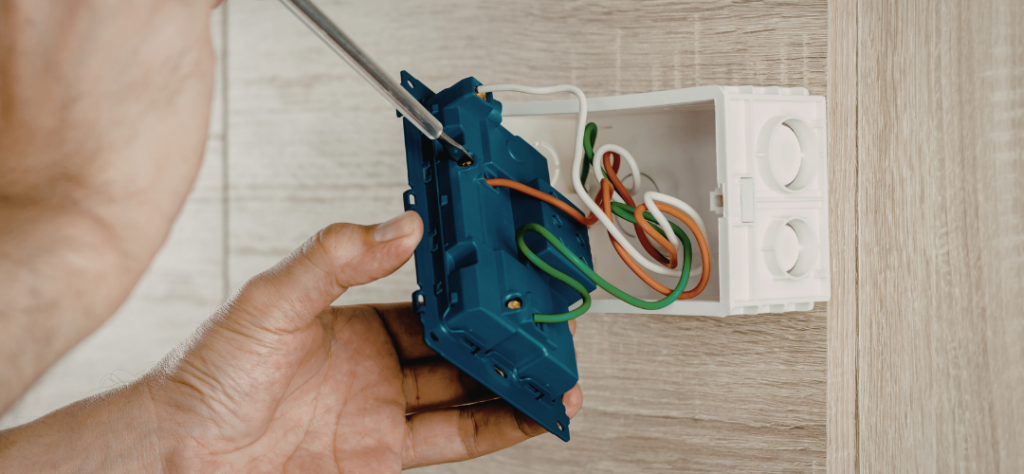
Upgrading from two-prong to three-prong receptacles requires pulling a completely new, grounded wire from the main electrical panel to each individual box in the wall. The third prong on a modern plug connects directly to this ground wire. This setup protects the sensitive microprocessors inside your televisions, computers, and smart appliances from sudden voltage spikes and static buildup.
What Happens During The Installation Process?
Professional wiring and outlet installation requires meticulous planning and execution to protect the structural integrity of your house. A licensed electrician begins by mapping the entire existing electrical grid, identifying every circuit, switch, and junction box. They calculate the total electrical load your family requires based on your specific appliances and daily routines.
The physical work starts at the main electrical panel. The electrician shuts off the main power feed from the utility company. They systematically remove the outdated wiring, pulling it completely out of the wall cavities whenever possible. They drill precise pathways through the wooden framing to route the new, modern Romex cable. Romex consists of a hot wire, a neutral wire, and a bare copper ground wire, all encased in a tough, heat-resistant PVC sheathing.
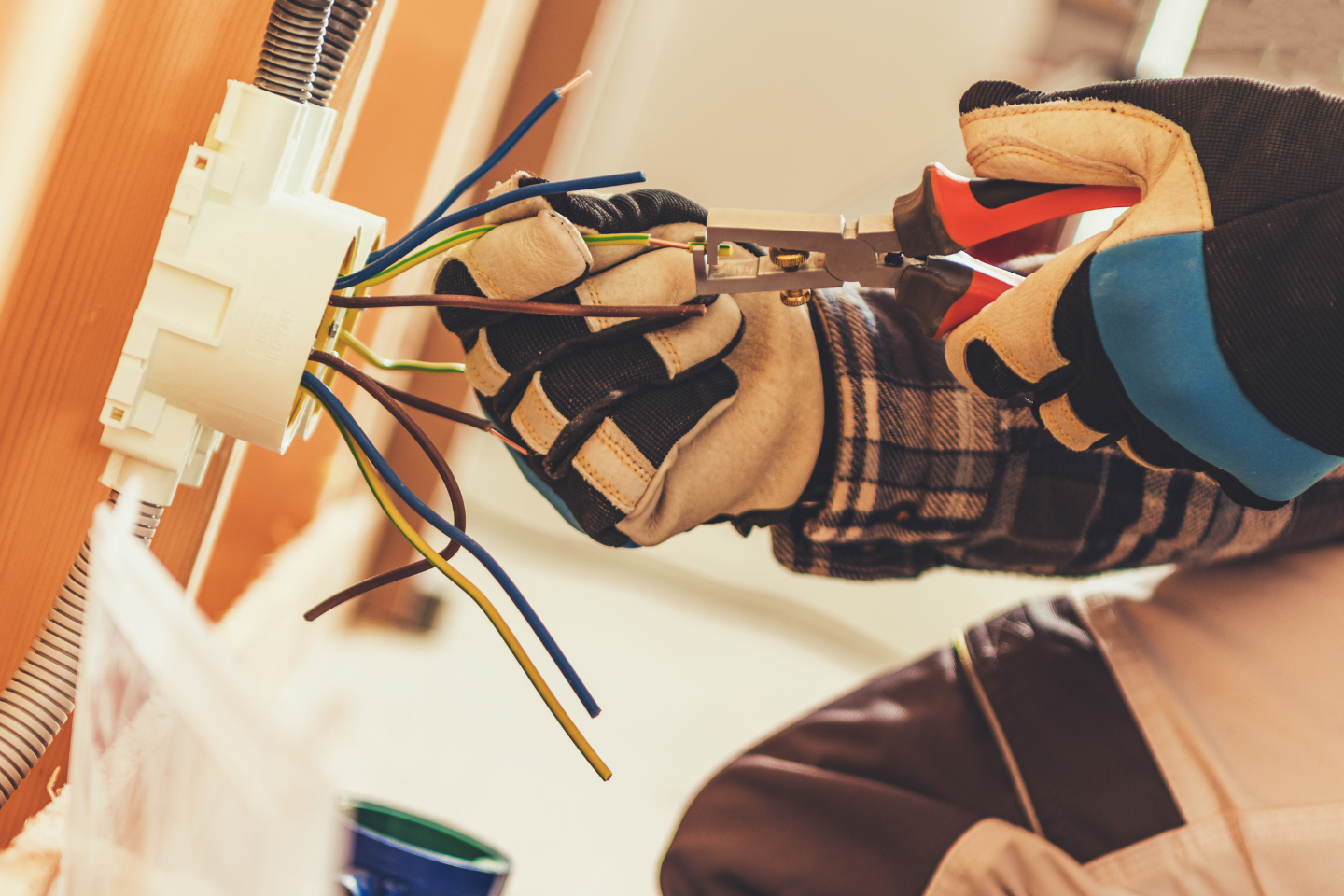
The electrician runs this new cable to every designated location, securing it firmly to the wooden studs to prevent any future movement. They install new, high-capacity junction boxes, carefully stripping the ends of the copper wire and securing them tightly to the brass and silver screws on the sides of the new receptacles. They verify that the polarity is correct, matching the hot wire to the correct side of the device to maintain a safe flow of electricity.
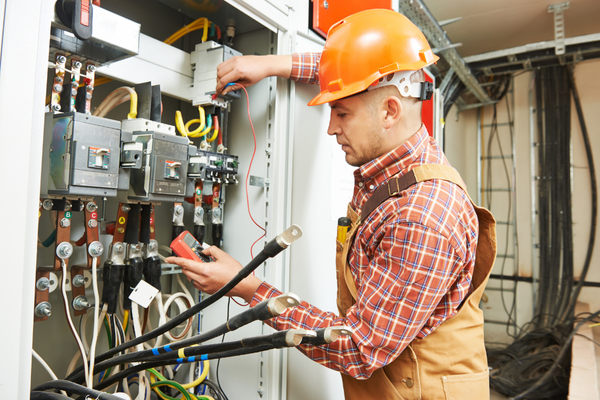
Once all the physical components are mounted securely, the entire system undergoes rigorous testing. The electrician checks every single receptacle with a multimeter to confirm proper voltage, correct polarity, and a solid connection to the earth ground. They trigger the test buttons on every GFCI and AFCI device to verify the internal safety mechanisms trip exactly as designed. The entire project must then pass a strict review by the local building inspector, confirming the work meets or exceeds all current safety regulations enforced in Fort Mill, SC.

Trust Your Home To Johnathon Brown Electric
Ignoring the warning signs of an aging electrical system places your entire property at immense risk. Flickering lights, warm switch plates, and the lingering smell of ozone are urgent signals that the wires hidden behind your drywall are failing to handle your daily power requirements safely. Upgrading your infrastructure requires a deep understanding of electrical theory, building construction, and local safety codes.
Johnathon Brown Electric provides highly precise, deeply knowledgeable wiring and outlet installation for homeowners throughout Fort Mill, SC. Our team evaluates the exact condition of your current electrical layout and designs a safe, reliable replacement strategy that supports all your modern appliances. We handle the entire permitting process, execute the physical installation with meticulous care for your walls and property, and stand firmly behind the quality of our craftsmanship.
Do not wait for a failing wire to cause a catastrophic event in your home. Contact Johnathon Brown Electric today to schedule a thorough evaluation of your current electrical system and discuss the specific wiring and outlet installation solutions required to keep your property completely safe.